
MENU

get in touch
charlotte@alkidesign.co.nz
+64 27 261 1588
+64 27 261 1588
follow us
@alkidesign
Facebook • Instagram • LinkedIn
Facebook • Instagram • LinkedIn
The relationship between humans and natural materials has been studied extensively across environmental psychology, neuroscience, and health design. Within this field, biophilic design has emerged as a useful framework — not because it offers tidy answers, but because it acknowledges something architects have long intuited: humans do not experience buildings as neutral containers.
"Architecture operates on the nervous system, whether we acknowledge it or not."
We respond to them physiologically, emotionally, and subconsciously. Architecture operates on the nervous system, whether we acknowledge it or not.
Timber is one of the most immediate ways nature enters the built environment. Unlike manufactured materials that strive for uniformity, wood carries visible evidence of its origin. Grain direction, growth rings, density variation, knots, and imperfections are not decorative overlays; they are intrinsic to the material itself.
In this way, timber quietly communicates that it once belonged to a living system. That recognition appears to matter more than we often give it credit for.


A growing body of research suggests that exposure to natural materials, including wood, can be associated with reduced stress responses and increased feelings of comfort and calm. In some studies, these responses are measured physiologically rather than through self-reporting alone, indicating that material environments may influence the nervous system at a level below conscious interpretation.
"..wood, can be associated with reduced stress responses and increased feelings of comfort and calm."
At the same time, it is important to be precise. Timber does not automatically create wellbeing, and it is not accurate to suggest that timber buildings are inherently restorative or therapeutic. Many studies are small in scale, short in duration, or context-specific. Cultural expectations, climate, detailing, and use all play a significant role in how a space is perceived and inhabited.
But dismissing the research entirely would also be a mistake.
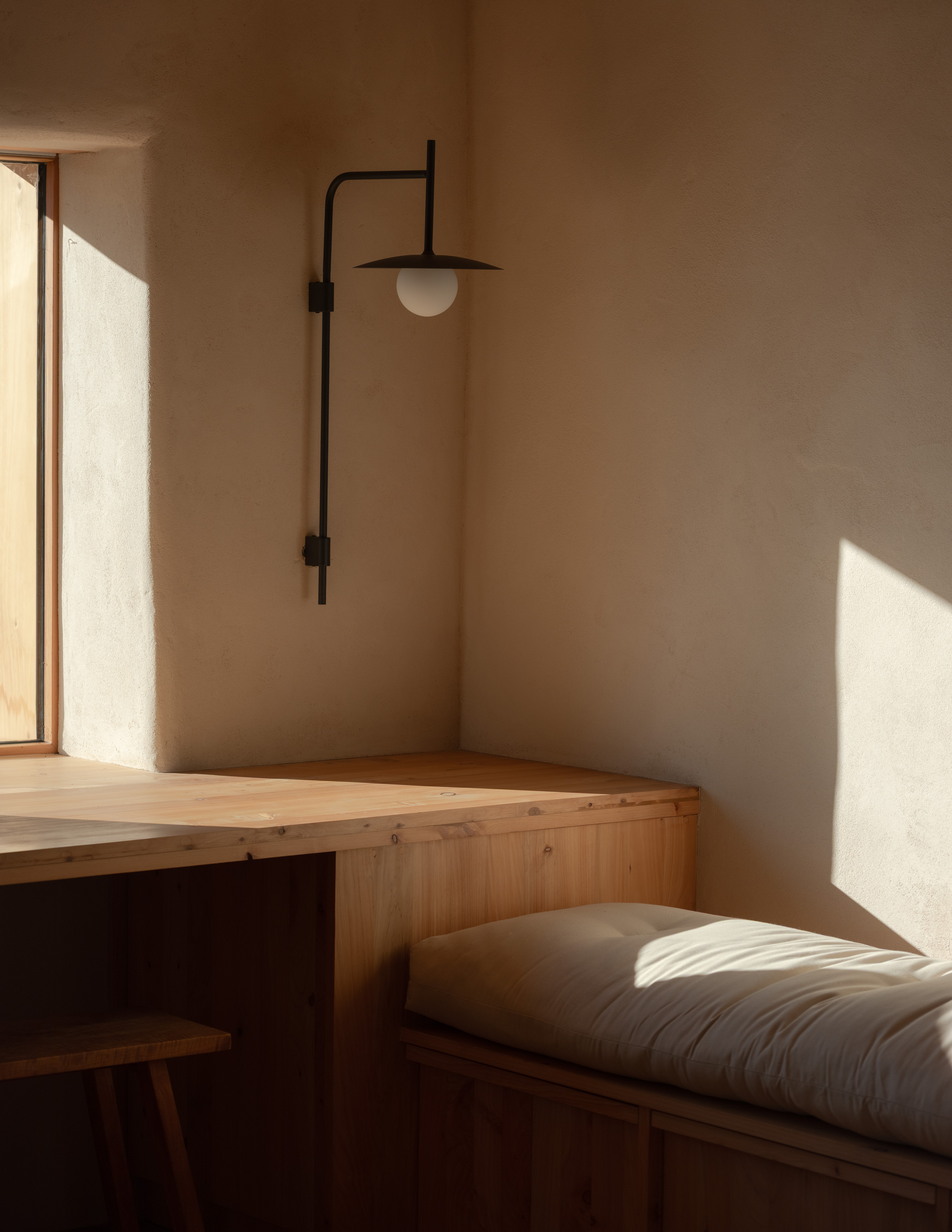
When read carefully, the evidence supports a more subtle and arguably more valuable conclusion. Timber-rich environments appear to be less physiologically demanding. They place fewer demands on our attention. They soften acoustic and visual conditions, and contribute to spaces that are easier to occupy over time.
"Timber’s strength lies in its restraint. It does not compete for attention or demand interpretation."
This matters because much of contemporary life is already overstimulating. Architecture does not need to add to that burden. Timber’s strength lies in its restraint. It does not compete for attention or demand interpretation. Instead, it supports a background condition of calm, allowing other aspects of life — conversation, rest, focus — to come forward.
Timber’s relevance is not rooted in novelty. It endures because it aligns with how humans perceive, touch, and move through space. Its appeal is not symbolic; it is experiential.
The materials we build with shape how we feel long before we articulate why. Timber’s quiet capacity to support comfort, familiarity, and calm may be one of the reasons it continues to matter — not as a solution, but as a companion to thoughtful architecture.
Next month, this series will turn toward Planet, examining forests, growthcycles, carbon storage, and the responsibilities embedded in choosing wood as a building material.
For now, this first lens offers a grounded starting point:
If architecture is ultimately about people, then materiality deserves to be considered not just for how it performs — butfor how it is lived with.


