
MENU

get in touch
charlotte@alkidesign.co.nz
+64 27 261 1588
+64 27 261 1588
follow us
@alkidesign
Facebook • Instagram • LinkedIn
Facebook • Instagram • LinkedIn
From a climate accounting perspective, timber’s most significant attribute is carbon storage. As trees grow, they absorb carbon dioxide and store carbon in their biomass. When timber is used in long-life products such as buildings, that carbon can remain stored for decades, sometimes centuries.
The Intergovernmental Panel on Climate Change (IPCC) recognises harvested wood products as carbon pools within national greenhouse gas inventories. This means that, under certain accounting frameworks, wood used in buildings can contribute to temporary carbon sequestration rather than immediate emissions.
But this benefit is not intrinsic to timber alone. It depends on sustained forest regrowth, on the avoidance of land-use change, and on long service life. If forests are cleared without regeneration, or if timber products are short-lived and rapidly decomposed or burned, stored carbon returns to the atmosphere.
Timber is therefore not inherently carbon-negative. Its climate value is inseparable from forestry continuity and building longevity.
In Aotearoa New Zealand, much structural timber is sourced from plantation-grown radiata pine. These forests typically operate on rotations of approximately 25–30 years, a timeframe optimised for commercial yield rather than ecological maturity.
Plantation forestry can be efficient and productive, and it plays a significant role in New Zealand’s economy. However, a plantation forest is not the same as a native forest ecosystem. Biodiversity levels, soil complexity, understory habitats, and carbon density differ significantly.
From a planetary perspective, time matters.
Rapid rotations maximise throughput, but they also produce timber with wider growth rings due to accelerated growth. Wider rings can indicate lower density in some species, which may influence strength grading, durability characteristics, and long-term performance. Faster growth is not inherently problematic — but it does represent a shift in material character driven by market demand.
When we specify timber, we are participating in this tempo.
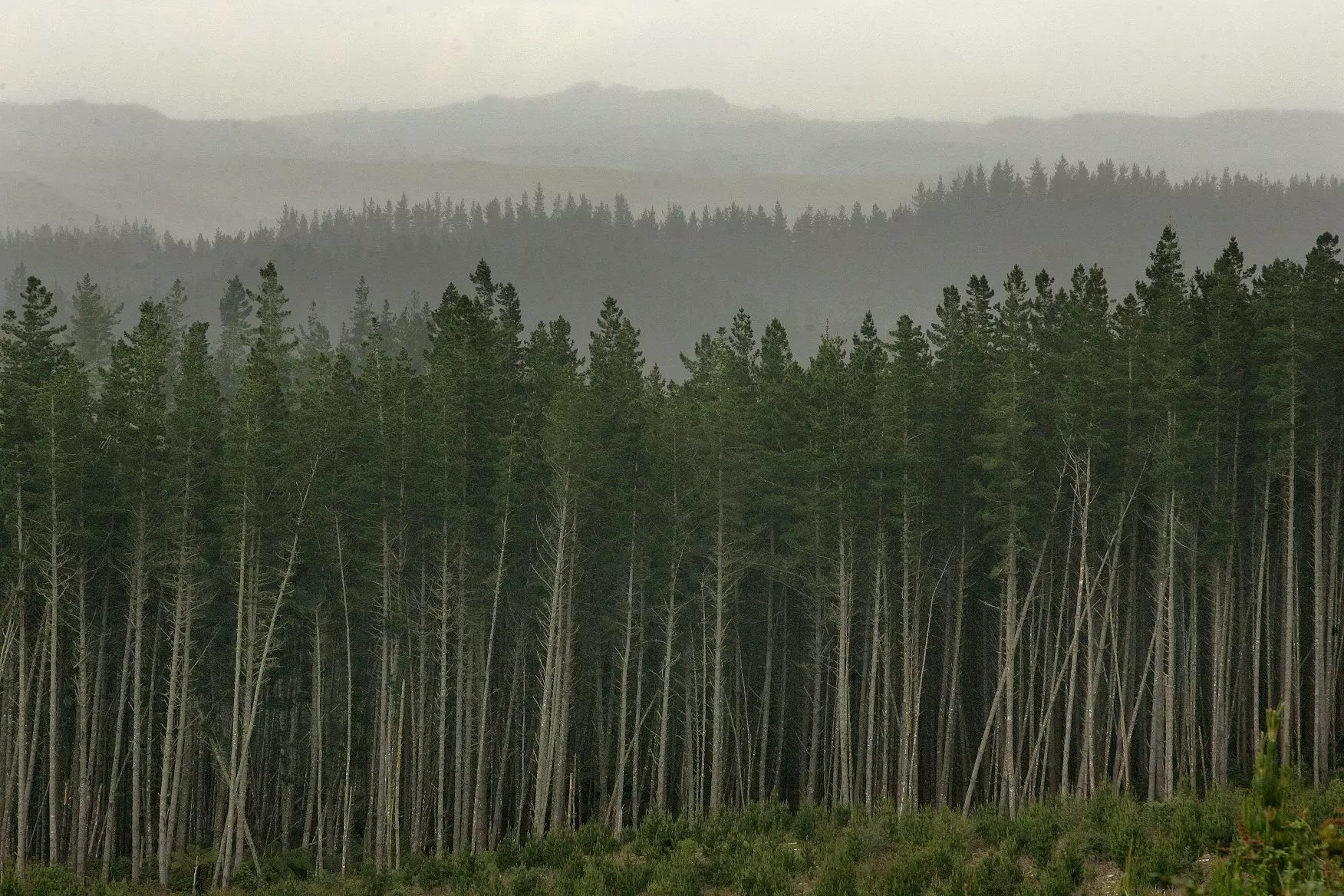

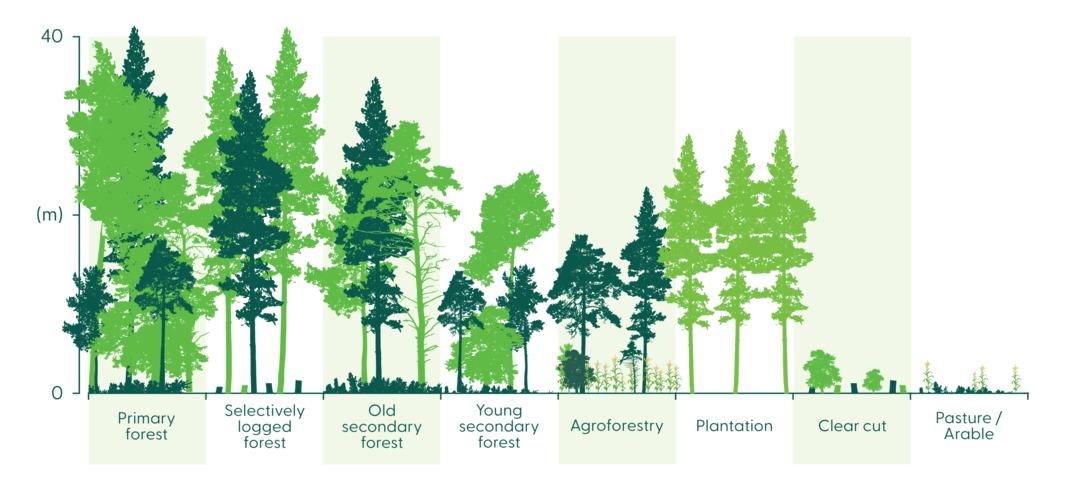
Globally, forestry practice varies dramatically. Some systems operate as monoculture “farm forests,” planted, harvested, and replanted in simplified cycles. Others incorporate thinning regimes, mixed-species planting, and longer rotations that support biodiversity and structural resilience.
In parts of Canada and Scandinavia, thinning practices are used to selectively remove trees over time, allowing remaining trees to grow more slowly and with tighter growth rings. This can result in denser timber, improved structural characteristics, and more stable forest ecologies. Thinning can also reduce wildfire intensity by managing fuel loads — a critical strategy in fire-prone landscapes.
The forest is treated less as a crop and more as a living system.
These stewardship models do not eliminate harvesting, but they change its logic. The forest is treated less as a crop and more as a living system.
For architects, these distinctions matter. Timber is not a singular environmental choice; it is an outcome of management philosophy.
Beyond sequestration, timber’s planetary value also lies in substitution. Cement production alone accounts for a significant proportion of global carbon emissions. When structural systems shift from high-emission materials toward timber, upfront embodied carbon can be substantially reduced.
However, substitution benefits must be assessed carefully. Transport distances, kiln drying, processing energy, hybrid structural systems, and treatment methods all influence lifecycle outcomes. A locally sourced timber structure may perform very differently from an imported engineered system transported across hemispheres.
Whole-of-life carbon assessment — rather than material allegiance — is the more honest metric.
Whole-of-life carbon assessment — rather than material allegiance — is the more honest metric.
Timber is not environmentally virtuous by identity. It is powerful when strategically deployed.
Timber’s environmental narrative is neither simplistic nor sentimental. It is embedded in cycles of growth, harvest, design, maintenance, and eventual return.
When forests are responsibly managed, when regrowth is continuous, when biodiversity is protected, and when buildings are designed for long service life, timber can be a powerful ally in climate-conscious architecture.
But it is not innocent by default.
The planetary case for timber requires transparency, time-awareness, and intellectual honesty. It asks architects to look beyond the surface of a material and into the systems that produce it.
Next month, this series will turn toward Performance, examining structural behaviour, moisture dynamics, treatment, and durability — the material science that underpins timber’s planetary potential.
For now, the planetary lens offers a grounded conclusion:
Building with timber is not an environmental gesture.
It is participation in a living system.


